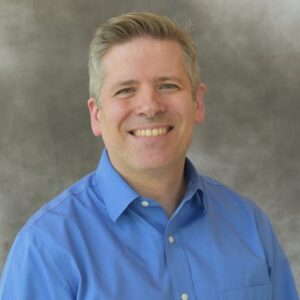
Interim Chair, Department of Medical Physics
To our Alumni, Former and Current Faculty, Students, Residents, and Staff,
As we enter the summer of 2026, this is a moment to reflect on the strengths that define our department, to recognize the individuals who have shaped its impact over the past 45 years, and to look ahead to new opportunities developing across the Department of Medical Physics and the University of Wisconsin School of Medicine and Public Health.
At its core, our department advances dual missions of research and education in close collaboration with clinical partners, developing innovations that improve patient care in Wisconsin and beyond while training the next generation of leaders in medical physics. This intersection of discovery, translation, and education remains a defining strength of the department.
Looking ahead in research, we are excited to enter the next phase of theranostics infrastructure development, with groundbreaking for the new cyclotron facility at the Wisconsin Institutes for Medical Research planned for fall 2026. This milestone will expand radionuclide production in support of research and clinical translation, aligned with broader SMPH efforts.
Education remains central to our mission, and we look forward to welcoming 15 doctoral and 7 master’s students this fall, bringing our total cohort to 96 and continuing the scale and impact that define Medical Physics. Our pipeline has strengthened through the ASSURE summer undergraduate research program, now in its first fully NIH-funded year and hosting 17 students from across the country. This is complemented by continued development of the imaging physics residency.
This year also provides an opportunity to recognize individuals whose contributions have shaped the department and the field.
This spring, we held the inaugural Rock Mackie Lectureship in New Technology and Entrepreneurship on April 20, reflecting Rock’s longstanding leadership in innovation in medical physics. Fundraising for the Mackie initiative has been highly successful, establishing an endowment to support future speakers and related programming. Rock’s broader impact continues through advances in radiation therapy, including a recent world first in compact upright proton therapy.
We are also proud to recognize Bruce Thomadsen, featured in this newsletter, who will receive the William D. Coolidge Gold Medal at this year’s AAPM meeting, the highest honor awarded by the organization. Bruce has been a central figure in the field for many years, serving as president of the AAPM and as a member of its board of directors, following extensive leadership in committee roles. His contributions have shaped the profession through sustained engagement in clinical practice, patient safety, and professional leadership.
We also recognize with appreciation the many contributions of Beth Meyerand, who recently transitioned to Vice Provost and Dean of the Graduate School at the University of Rhode Island. Her impact on medical physics, biomedical engineering, and UW–Madison has been deep and wide-ranging. She built a nationally-recognized program in MRI, mentored generations of students, and served as chair of the Department of Biomedical Engineering, Vice Provost for Faculty and Staff Affairs, and Associate Dean of the Graduate School, in addition to multiple leadership roles within the Department of Medical Physics. We are grateful for her contributions and wish her well.
Finally, we mark the loss of a foundational member of our community, Charles “Chuck” Mistretta, who passed away on June 9. His work reshaped medical imaging, applying physics insight in collaboration with clinical partners to create technologies such as digital subtraction angiography and advanced time resolved MR angiography. His career was recognized with numerous honors, including election to the National Academy of Engineering, fellowship in the National Academy of Inventors, and the Gray Medal of the ICRU. His influence extends through generations of students, trainees, and collaborators, and his legacy remains central to our department.
As we reflect on these individuals and their impact, we are reminded that their influence continues in the work we do every day. Our alumni, faculty, staff, and learners carry these traditions forward through collaboration and innovation.
Looking ahead to fall 2026, we anticipate a full schedule of departmental events, along with continued progress in faculty development and strategic initiatives.
Thank you for your continued support and engagement with the department.
Warm regards,
Michael Speidel, PhD
Interim Chair, Department of Medical Physics